At Taman Menteng in Jakarta, there is a scene that may feel unusual.
A group of people sit under the trees, on park benches, or on mats they bring themselves. There is no stage, no loudspeaker, no lengthy discussion. In fact, there is very little conversation at all.
They simply read. In silence.
In a city that never seems to slow down, this simple activity feels surprisingly refreshing. We live in an era where attention has become a commodity, every app competes for our focus, every notification demands a response, every screen offers something new to look at.
Yet in that park, everything slows down. A book is opened, page after page is read, and for a moment, the world no longer seems to be in a hurry.
Reading Alone, Together
There is something unique about the idea of silent reading.
Reading has traditionally been a deeply personal activity. We read alone in our rooms, in libraries, or in our favorite corner of a café. No one knows what goes through our minds when we encounter a moving sentence or an idea that changes the way we see the world.
Silent reading offers a different experience: we still read alone, but we do it alongside others. There is no requirement to read the same book, no pressure to speak, no expectation to perform.
There is only presence, and sometimes, presence is enough.
In the Age of Scrolling, Reading Is a Radical Act
We may be reading more than previous generations. But most of what we read comes in fragments, headlines, comments, captions, messages, endless timelines that never stop moving.
Books are different. Books ask for something increasingly rare: undivided attention. A novel invites us to stay in one world for hundreds of pages, a philosophy book asks us to sit with a single idea for days, a biography allows us to experience another person’s journey.
Reading is an exercise in focus. And in an age where focus is constantly under attack, reading becomes a quiet act of resistance.
The Philosophy of Silence
Many philosophers have spoken about the importance of pauses, about humanity’s ability to stop for a moment and ask: what truly matters? What am I pursuing? What is the meaning of all this busyness?
The problem is that questions like these rarely emerge when we are constantly distracted. Reading creates space for thought, not because every book contains answers, but because books often provide better questions.
In the silence of reading, people encounter new ideas, different perspectives, and sometimes even parts of themselves they never knew existed. Perhaps that is why reading often feels deeper than merely consuming information.
A Quiet Movement Among Young People
Interestingly, more and more young people are beginning to embrace reading as part of their identity and lifestyle, not because reading looks academic, not because they want to appear intellectual, but because reading offers something increasingly difficult to find: calm.
In a culture that constantly encourages us to speak, post, comment, and react, reading teaches something different, to listen, to reflect, to understand.
Reading movements do not always arrive with grand campaigns or loud slogans. Sometimes they appear in much simpler forms: a group of people gathering in a park with books in their hands.
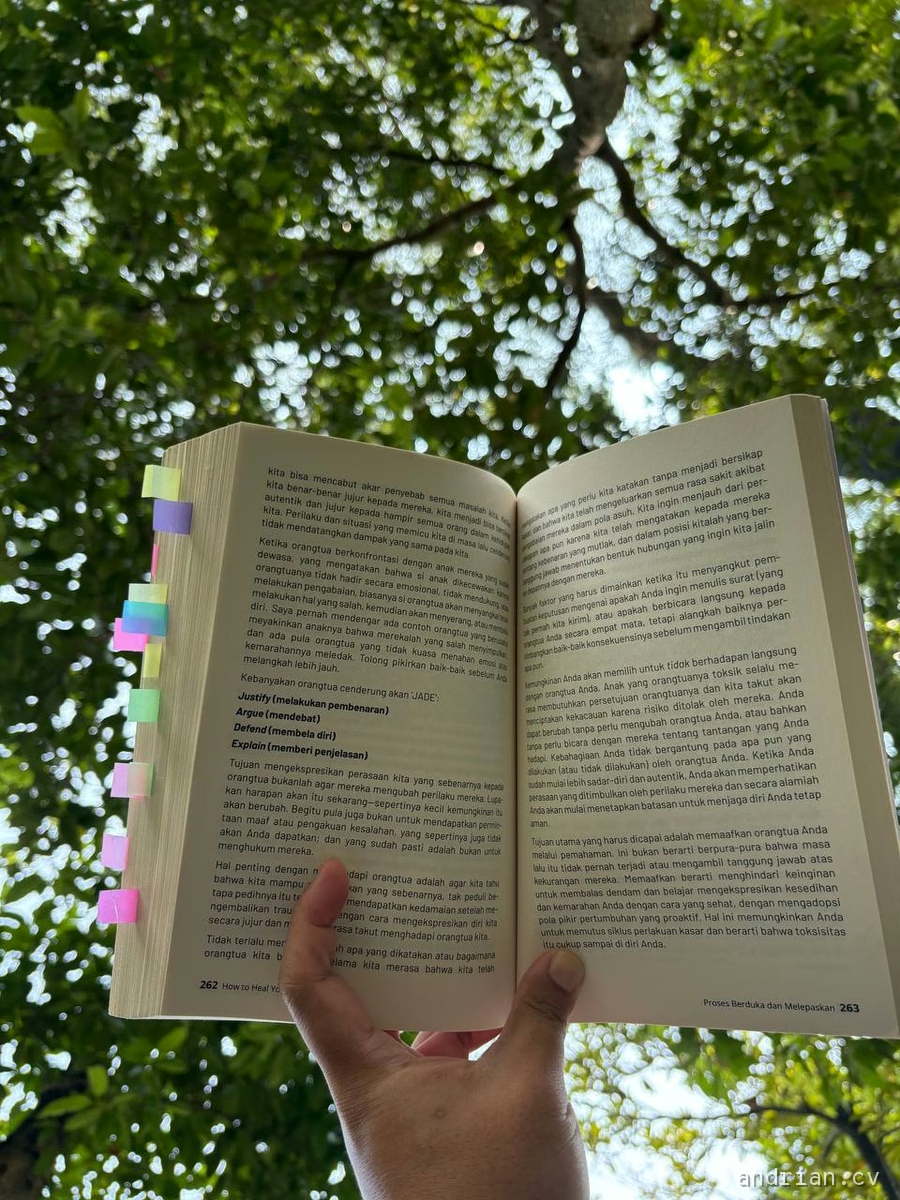
When Reading Becomes Instagrammable Entertainment
There is another interesting aspect to this phenomenon. Reading has become visually appealing, stacks of books, notes written in the margins, a warm cup of coffee, shady trees, the afternoon sunlight. Together they create an atmosphere that is difficult to explain but easy to feel.
Yet the appeal of reading is not found in the photograph shared on social media, but in what happens after the picture is taken. Because a good book does not simply fill time, it changes the way we see the world. And there are not many forms of entertainment capable of doing that.
More Than Reading
In the end, silent reading is not just about books. It is a reminder that human beings need space to think, need moments of silence, need opportunities to be fully present in one place without being pulled in countless directions.
In a city park, beneath the Jakarta sky, with the distant sound of traffic fading into the background, people open their books. They arrive with different stories, read different titles, seek different things. Yet perhaps they share one common purpose: to rediscover an ability that is becoming increasingly rare in the modern world, to sit quietly, open a book, and enjoy the process of thinking.