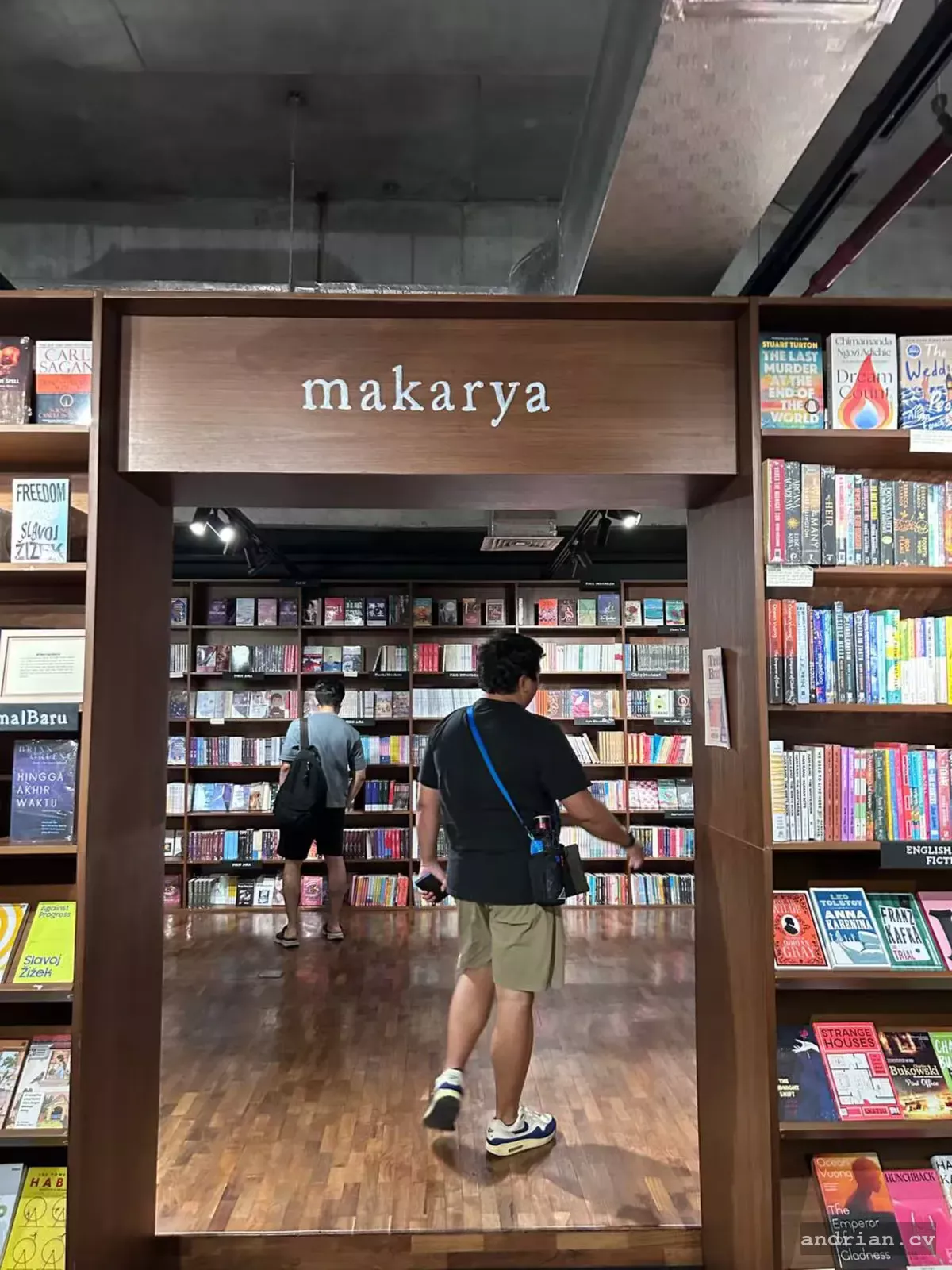
The interior of Makarya, a bookstore that demonstrates how thoughtful spatial design can turn browsing into an experience worth leaving the house for.
The Problem With Most Bookstores
Walk into a typical chain bookstore and you know exactly what you will find: fluorescent lighting, narrow aisles, shelves packed spine-out to maximize inventory density, and the faint smell of stale coffee from a corner café that stopped trying years ago. These spaces were optimized for one thing — moving units — and it shows in every design decision.
Generation Z grew up in a world where online stores deliver any book to their door by tomorrow morning. Asking them to visit a physical store means competing with convenience on a scale that most retailers cannot win. The only leverage physical bookstores have left is experience, and most of them are not using it.
What Makarya Gets Right
Makarya is different. From the moment you step inside, the space communicates intention. The industrial-style lighting fixtures cast a warm, focused glow over each section rather than washing the entire floor in uniform brightness. Wooden shelves arranged at varied heights break the monotony of grid layouts, creating natural discovery paths that invite wandering rather than directing traffic.
The design borrows from third-wave coffee shops and boutique retail: exposed materials, curated displays that favor cover-facing presentation, and enough open space to breathe. Two people browsing the shelves in the photograph above are not bumping shoulders — they have room to exist in the space without feeling crowded. That might sound like a small detail, but for a generation that curates every aspect of their digital presence, a cramped physical environment is an immediate turn-off.
Why Design Matters for Reading Culture
This is not just about aesthetics. Well-designed bookstores serve a function that algorithms cannot replicate: serendipity. Recommendation engines show you more of what you already like. A good bookstore layout shows you things you did not know existed, arranged by human judgment rather than collaborative filtering.
For younger readers who have spent their entire lives inside algorithmically sorted content feeds, the experience of discovering a book because it was physically adjacent to something else they picked up is genuinely novel. It feels like finding something on purpose, even if the store’s layout did half the work.
Several studies on retail psychology have shown that ambient factors — lighting, music, spatial layout, scent — significantly influence dwell time and purchase intent. Bookstores that invest in these details are not being precious; they are being strategic.
The Gen Z Factor
Gen Z reads. Contrary to the tired narrative about short attention spans, survey data from the American Library Association and various publishing industry reports shows that young adults read more books per year than older generations, particularly in print format. What has changed is how they discover those books: through BookTok, Instagram, and YouTube rather than through newspaper reviews or bookstore displays.
Makarya seems to understand this intuitively. The store is designed to be photographed. Every corner could be a post. The lighting is flattering. The typography on the section labels is consistent. The sightlines are clean. None of this is accidental — it is built for a generation that documents their life online, and a bookstore that photographs well is a bookstore that gets free marketing every time a visitor posts.
What Other Bookstores Can Learn
You do not need to gut-renovate your space to apply these principles. A few high-impact changes:
Lighting. Replace uniform overhead fluorescents with warmer, directional fixtures. Let each shelf or section feel distinct rather than part of one large warehouse.
Curated displays. Face more covers outward. Rotate them frequently. Give the staff creative control over end-cap arrangements — their taste is a differentiator that no algorithm can match.
Space. If you can afford to reduce linear shelf footage by 10%, do it. A store that feels spacious signals quality over quantity.
Photographability. Think about sightlines. Clean up visual clutter. Add one or two distinctive architectural elements — a mural, an unusual light fixture, a reading nook with character — that give visitors a reason to pull out their phone.
The Bigger Picture
Physical bookstores are not competing with e-commerce on price or selection. They are competing on atmosphere, discovery, and the intangible satisfaction of being in a room full of books with other people who also want to be there. Stores like Makarya prove that when you take design seriously, younger audiences show up — not because they have to, but because they want to.
And that is worth more than any algorithmic recommendation.